A white paper on the Marine Bill entitled 'A Sea Change' was released by DEFRA in March
To protect and preserve - The Marine Bill
The Napoli highlights the need for better coastal protection in the UK according to Devon Wildlife Trust, the group that’s been pushing for the government to commit to a Marine Bill for over a year.
Spokesman for the charity, David Ireland said: “It’s quite a coincidence that The Napoli happened at a time when we’re only a year away from trying to organise something called Marine Spatial Planning.”
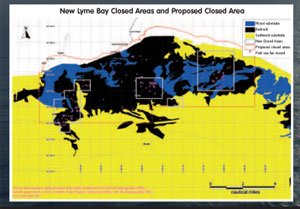
Marine Spatial Planning is a way of managing the marine environment taking into account the users of Lyme Bay and where all the key habitats are that need protecting. It would be brought into action through the proposed Marine Bill and will allow Marine Conservation Zones to be created off the UK Coast. 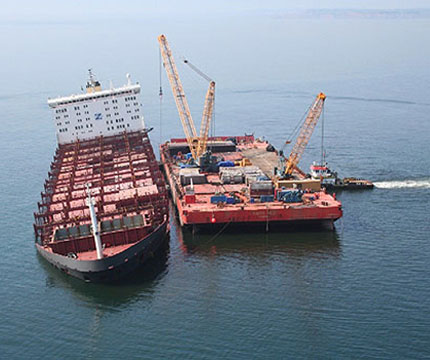
Lyme Bay has been studied by Devon Wildlife Trust for more than 15 years; it is considered to be one of the top 5 reef systems in the UK, covering more than 60 square miles. There is currently no formal protection for the reef other than a voluntary agreement from scallopers not to dredge some of the area.For the last year, protecting the reef from scallop dredging has been the primary focus of Devon Wildlife Trust’s push for the creation of Marine Conservation Zones. Mr Ireland described The Napoli as “another blow to an already fragile system.”
There has been much praise of SOS Rep, (Secretary of State’s Representative for UK Maritime Salvage and Intervention) and the decisions he made, but Devon Wildlife Trust hopes that in the future with Marine Spatial Planning, different decisions would be made.
Devon County Council coastal officer, and member of the Incident Environment Group for the Napoli, Aidan Winder thinks that it may be optimistic to think that emergency response teams would always adhere to such laws and protection zones.
He said: “There’s a debate to be had there as to how the decisions are made and what criteria are used. My own personal view is that we probably got it right in this instance – luckily, we got away with it. The amount of environmental pollution I think was probably reduced because of the action that SOS Rep took.”
Mr Ireland said: “You’d like to think that things would have been done differently, if Marine Spatial Planning comes forward I would presume that the ship would then have known that there are certain areas to avoid, and certain places that are high risk thankfully the boat was actually grounded beyond the reef but things like the oil pollution would travel anyway.”
However SOS Rep Robin Middleton, who was responsible for the making the decision to beach The Napoli in Lyme Bay does not agree.He said: “My job is to take the decisions that need to be made over and above any other regimen; it’s difficult to see how I could have come to any other conclusion under those circumstances if they happened again.”